Why BYTC Doesn’t Take Insurance
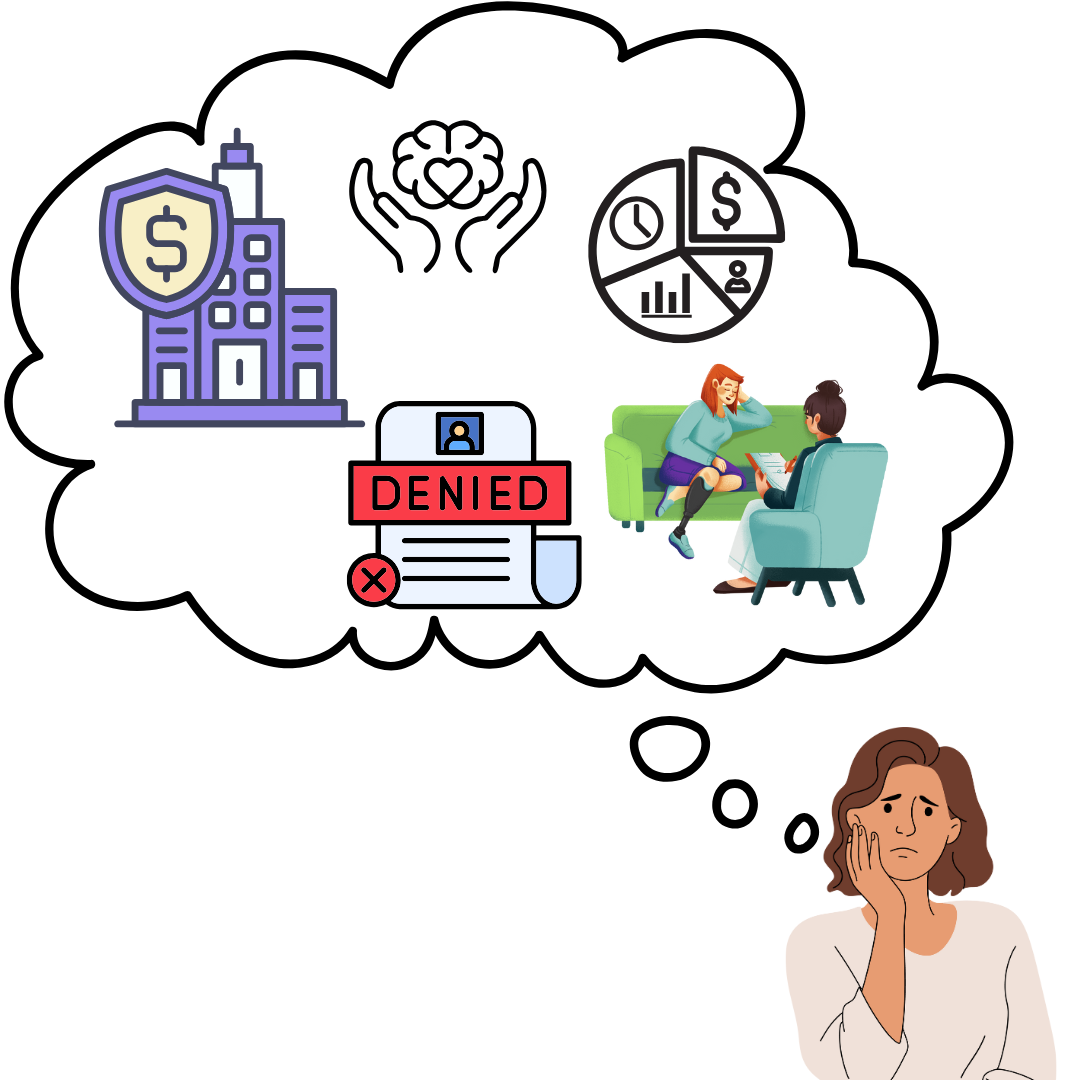
Let me just start this nuanced conversation by mentioning that this is a highly polarizing topic among the mental health community, and there are valid arguments on both sides. One of the main reasons why some clinicians support taking insurance is that it can make mental healthcare more accessible to those in need who can’t afford out-of-pocket services. This is a very important consideration given that everything is getting more and more expensive these days. Even having insurance/healthcare benefits in the first place is a privilege (of sorts) since many Americans cannot even afford healthcare plans. Finances are tight, costs are rising, and so expendable income gets more restricted. There are also many families in the Northern Virginia area who have been impacted by the government shutdown. I get it, and I don’t deny that seeing an in-network therapist might be the only viable option for some individuals. Receiving a steady flow of in-network referrals from insurance companies might be the only way some therapists are able to keep practicing. I am certainly not shaming any clinician who accepts insurance or any individual who sees an in-network therapist.
But what if finances weren’t the most important priority when determining going to therapy or which therapist to see? What if insurance involvement in treatment was actually more harmful than helpful to mental healthcare?
I’ve had many years to reflect on the insurance issue, first working with a group practice that took insurance and then working with another group practice that didn’t accept insurance. And now as a fully licensed clinician, I had to make that choice for my business.
The short answer to why BYTC doesn’t take insurance is this: It goes against my values as a therapist.
But that probably didn’t really answer your question, so let me explain! (I’m about to get on my soapbox, so be forewarned)
1.) I don’t believe in limiting therapy to what insurance companies deem coverable. Insurance companies dictate standards of care that favor company profit over client needs and experiences. They mandate general, standardized guidelines regarding the number of sessions, the type of therapy provided, and even requirements around the diagnosis itself and justifying necessity for therapy without considering the individual receiving care. If you don’t need therapy from the insurance company’s perspective, they will not cover your treatment. These companies have been known for restricting coverage and delaying/denying treatment based solely on the rulings of an insurance representative who has no clinical experience over the professional judgment of a trained clinician who has actually interacted with you, the client. Insurance often also requires the use of a small range of specific types of therapy despite the validity and evidence-based findings of a variety of modalities. These modes of therapy are frequently not what a client wants or needs from their treatment. Therapy should be specifically tailored for you. By not working with insurance, you have more control over your therapy experience that is personalized to fit your needs.
2.) I don’t like compromising my client’s confidentiality and privacy. Working with insurance companies means your mental health information (like your diagnosis, progress, and records) are able to be stored and accessed by various parties within the insurance company. Insurance requires a diagnosis after the very first session to see if that diagnosis is coverable. Once a diagnosis becomes part of your medical record, it can unfortunately have negative impacts down the line on your future care and qualification for services/insurances.
Furthermore, receiving a diagnosis can also be harmful for the individual especially if it is a diagnosis that is often misunderstood or stigmatized by society. Medical discrimination still exists, unfortunately, meaning people have received biased care based solely on having a diagnosis in their chart that later resulted in negative health consequences. Additionally, under the current political circumstances, it’s unclear how mental health diagnoses might be used in stigmatizing and discriminatory ways in the future, so I am inclined to be proactively protective and cautious for my clients. By not taking insurance, you have more control over who knows what about your mental health, and you are more protected from any potential repercussions related to a diagnosis being part of your official medical record.
3.) I don’t support the pathological, medical model that insurance companies base their standards from. This model see clients as being sick with a mental illness and therapy as the treatment to fix or cure them. While a diagnosis can be personally helpful for individuals in making sense of their experiences and identity, diagnoses often rely heavily on individual factors from a Western perspective without consideration of larger systemic, environmental, and cultural factors that may be contributing. That is not in alignment with my personal understanding of mental health and respect for your innate wisdom and capacity for healing and cultural background. I also believe that therapy can be used preventatively and proactively for gaining a better understanding of yourself, not just reactively to an already existing problem or for medical necessity (like in a crisis).
Because they use the medical model, insurance often also involves progress to be measurable and is becoming more numbers-based. Mental health isn’t the same as physical health that can usually be measured quantifiably (like a heart rate or blood levels). Mental health is inherently subjective and feelings-based, so therapy often results in emotional progress and healing which can’t usually be accurately determined with a scale or number. The medical model even calls it “behavioral health” instead of “mental health” because it focuses so much on the behaviors (symptoms) and not the feelings and emotions associated with them (the root cause). The medical equivalent would be taking pain-relieving medication to take your pain down from a 7 to a 3, but not actually identifying or addressing what caused the pain in the first place. I don’t want to have to focus on your diagnosis or your “problems” and would rather focus on building a strong therapeutic relationship, getting to know you and your story, and working on emotional growth and healing. By not going with insurance, you can receive treatment that approaches your mental health more holistically.
4.) I want to be the best therapist I can be, and I believe in the value of my work. Insurance requires a significant amount of time, effort, and patience in order to jump through their hoops, pursue reimbursements, fill out extensive paperwork, make phone calls and wait on hold, and push back on denied claims. It involves fighting with insurance representatives and having to advocate for your care to someone who hasn’t even met you! This is time and energy I would much rather be able to devote to you during your sessions, thoughtfully preparing for your sessions, or in taking trainings to better myself as a clinician.
Additionally, therapists are reimbursed at low rates by insurance companies, sometimes even less than half of their standard fee. Standard rates are reflective of your therapist’s expertise, training, and experience levels as well as being reflective of the rates of other clinicians in their area with similar training/experience. However, insurance does not take these factors into account and tends to offer a non-negotiable rate. If I accepted lower reimbursement rates from insurance companies, I would need to see more clients to fill my caseload so I can pay my bills and sustain my business. This would quickly lead to burnout and a lower standard of care than you deserve. By not working with insurance, I am able to be a more present and energized therapist for you.
In closing, I want to quickly address the idea that “private pay therapists are just in it for the money”: In general, mental health therapists have some of the lowest salaries in the healthcare field compared to other roles that require a master's degree or higher. Many of us have had to take on the extra student loans for a master’s degree, worked hundreds of hours in unpaid internships, and received lower rates during our residencies.
Additionally, the amount you pay for your sessions is NOT what private pay therapists are taking home. We have rent and accounting fees like other businesses but are also responsible for our own taxes, health insurance, PTO, or sick leave. We have other therapy-specific expenses like continuing education requirements, licensing renewal fees, liability insurance, EHR software, therapy supplies (especially for the playroom), etc. I am out here trying to make an earnest, liveable wage just like you while also following my career dreams and passions.
All this being said, I fully recognize that therapy can be a costly investment into your or your child’s current and future well-being, especially in the unstable financial landscape we find ourselves in right now. The responsibility for the broken mental healthcare system should fall neither onto me as the therapist nor you as the client. In order to support therapy accessibility, I have a select number of sliding scale slots available based on self-identified financial need. Check the policy here for more information!
Additional references/resources:
https://www.apa.org/topics/psychotherapy/insurance-mental-health-care
https://mentalhealthmatch.com/articles/untold-truth-why-your-therapist-doesnt-take-insurance
https://www.npr.org/sections/shots-health-news/2024/08/24/nx-s1-5028551/insurance-therapy-therapist-mental-health-coverage
https://www.psychologytoday.com/us/blog/paradigm-shift/201905/cant-find-psychologist-who-accepts-insurance-heres-why
https://coupleslearn.com/why-therapists-dont-accept-insurance/
https://slate.com/technology/2022/09/therapist-insurance-copay-reimbursement-affordable.html
https://health.usnews.com/health-care/for-better/articles/2017-07-13/5-ways-insurance-companies-meddle-in-your-health-care
https://www.bls.gov/ooh/community-and-social-service/substance-abuse-behavioral-disorder-and-mental-health-counselors.htm